
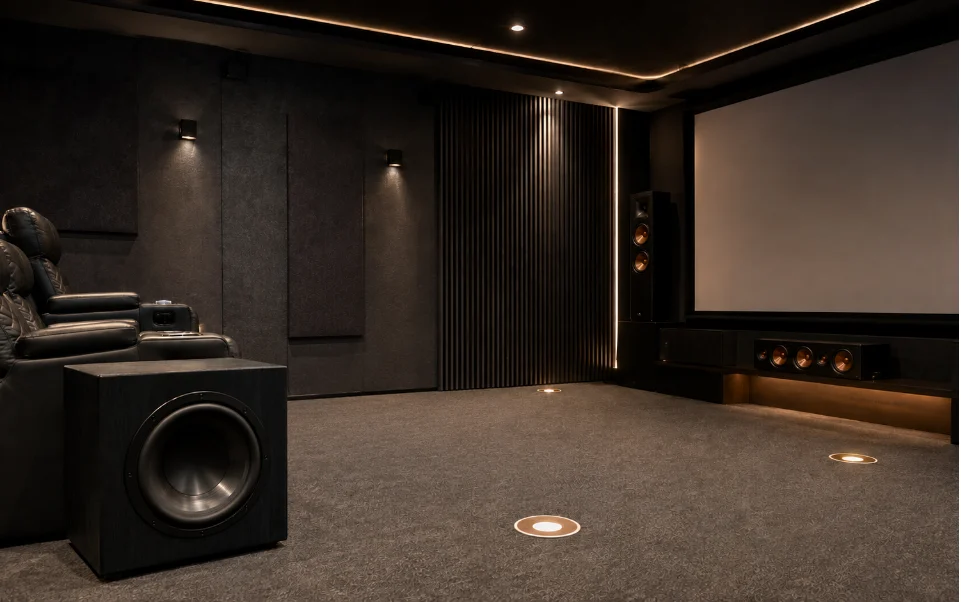
How Can I Find the Best Placement for My Subwoofer with the Subwoofer Crawl?

Use the subwoofer crawl method by placing the subwoofer at your main listening position, playing a bass-heavy track, and moving around the room to identify where the bass sounds the clearest and most balanced. That spot is usually where the subwoofer itself should go. This is the subwoofer crawl, and it works because bass behaves very differently at different points in a room.
Introduction
Getting bass right in a room can be very frustrating if you don’t have a clear idea about it. Put the subwoofer somewhere, plug it in, done. Except bass does not behave like that, and a subwoofer placed two feet to the left of where it should be can leave a room sounding thin, boomy, or oddly uneven from one seat to another. This is where the subwoofer crawl comes in, a technique used by home cinema enthusiasts and professional installers alike to find a placement that actually works with the room rather than fighting it. If you would rather have someone handle this for you, our home cinema installation team at Climax Cinemas carries out proper subwoofer setup as part of every full room fit.
What is the Subwoofer Crawl Method?
The subwoofer crawl method is a simple diagnostic trick rather than anything technical. You temporarily put the subwoofer where you normally sit, play music with a steady, repetitive bassline, then physically crawl around the room close to the floor, listening for where the bass sounds cleanest. Wherever that spot happens to be on the floor is usually where the actual subwoofer should end up once you swap things back.
It sounds almost too basic to work, and you do not need to calculate room modes or measure wall distances. Your ears do the calculating for you, in real time, as you move.
Why This Works Acoustically?
Low frequencies interact with a room’s dimensions in a way higher frequencies rarely do. When a bass wavelength lines up with a room’s length, width or height, it creates standing waves known as room modes, which cause bass to sound louder in some spots and almost missing in others. That is the entire reason the crawl method exists.
Why Subwoofer Positioning Matters So Much?
A subwoofer in the wrong spot does not just sound quieter. It can sound uneven, with certain notes booming and others disappearing almost entirely, depending on where you sit. This inconsistency is what makes best subwoofer placement such a commonly searched topic among people setting up a home theatre for the first time.
Home theatre subwoofer placement carries slightly different demands compared with music-only listening, since films rely on bass for tension and impact across a wide range of scenes, not just the occasional deep note. A poorly placed subwoofer in home theater becomes obvious quickly, usually during the first explosion or rumbling score that sounds thinner than it should.
And also, when planning subwoofer placement, it is important to consider whether you are using an active or passive subwoofer, as each type has different power and setup requirements. If you want to understand the main differences between active and passive subwoofers, read our detailed guide on active vs passive subwoofers.
Step-by-Step Subwoofer Crawl Method
Here is the practical version of the subwoofer crawl method, broken into stages.
1. Move the Subwoofer to Your Seat
Unplug the subwoofer and place it on the floor at your primary listening position, as close as practical to where you normally sit.
2. Play Continuous Bass-Heavy Material
Choose a track with a steady, repeating bassline rather than something sparse. Electronic music or film scores with sustained low tones both work well. Set it to loop.
3. Crawl the Room
Get down close to the floor, approximately at the height of the subwoofer driver, and move slowly around the room, pausing at potential placement locations to listen.
4. Mark the Best-Sounding Spots
Note down two or three locations where the bass sounds fullest, most even, and least boomy. Avoid spots where one note seems to overpower everything else.
5. Move the Subwoofer There and Retest
Put the subwoofer in your favourite marked spot, sit back in your normal listening position, and listen again. Fine-tune with small adjustments of a few inches if needed.
| Placement Type | Result | Best For |
|---|---|---|
| Corner placement | Strongest output, but often uneven | Small rooms needing maximum bass volume |
| Along a side wall | Balanced output, moderate boost | Most standard living rooms |
| Centre of a wall | More even, less boomy | Rooms where consistency matters more than sheer output |
| Away from all walls | Most even, but weaker output | Larger rooms with flexible furniture layout |
Common Placement Mistakes to Avoid
- Testing while standing rather than at seated ear height, which gives misleading results
- Stopping after the first decent spot instead of comparing two or three options
- Placing the subwoofer hard against a wall without testing a few inches out first
- Ignoring major furniture, openings, and changes to the room layout, which can affect the practical placement options and, in some cases, the low-frequency response
- Assuming one subwoofer crawl session is final, when most rooms benefit from a quick retest after rearranging furniture
When the Crawl Method Has Limits?
The subwoofer crawl technique is useful, but it works best with a single subwoofer in a fairly usual rectangular room. Once you start using two or more subwoofers, which many dedicated home cinemas do specifically to smooth out bass across several seats, the crawl method becomes far less reliable, since multiple subwoofers interact with each other and the room in ways a single moving unit cannot replicate. In those situations, proper subwoofer placement technique usually calls for measurement equipment and sometimes professional calibration software, rather than crawling around with your ears alone.
Rooms with unusual shapes, open floor plans, or heavy furnishing can also throw off results, since the crawl assumes a reasonably contained space with clear boundaries.
Conclusion
Finding the best spot for a subwoofer does not need to involve guesswork or expensive equipment. The subwoofer crawl remains one of the simplest and most reliable ways to find the best place for a subwoofer, precisely because it relies on how the room actually sounds rather than assumptions about how it should behave. Experts in the field take keen attention in placing a subwoofer in home theater as they know its importance very well. For straightforward single-subwoofer setups, a careful fifteen-minute crawl often solves the problem outright. For larger or more demanding cinema rooms, especially ones running multiple subwoofers, getting the setup right usually benefits from an experienced hand. If you would like your subwoofer setup done properly the first time, get in touch with the team at Climax Cinemas and we can help you find the placement, and the sound, your room deserves.
Frequently Asked Questions (FAQs)
Q1: How long does a subwoofer crawl usually take?
A1: A basic test can take around 15 to 30 minutes, depending on the size of the room and the number of locations you compare.
Q2: Can I use the subwoofer crawl method with two subwoofers?
A2: It becomes considerably less reliable with two or more subwoofers, since they interact with each other and the room together, so a single crawl test on one unit will not tell you the full picture.
Q3: Does the type of music matter for testing?
A3: Yes, a track with a steady, repeating bassline works far better than something with sparse or occasional bass notes, since you need a constant sound to judge as you move around the room.
Q4: Is optimal subwoofer placement always in a corner?
A4: Not always. Corners tend to give the loudest bass output, but that is not the same as the most even or accurate sound, so a corner is a good starting test point rather than an automatic final answer.