
What is the Purpose of a Subwoofer in a Home Theater System?

A subwoofer in home theater is to reproduce the deep, low-frequency sounds that regular speakers cannot handle, and this is about the bass tones that sit below 80 Hz, the kind you feel as much as you hear. Without a subwoofer, those sounds are either missing entirely or come through thin and unconvincing.
So if you have been wondering whether a home theater subwoofer is actually necessary, or just a nice addition, this blog can help you.
Why Your Main Speakers Are Not Enough
Most bookshelf speakers and even floor-standing speakers have a lower frequency limit, usually around 80 Hz to 100 Hz. Below that point, their performance drops off considerably. The drivers inside these speakers are simply too small to move enough air to produce deep bass effectively.
Bass is physically demanding, and it requires a larger driver, a bigger enclosure, and more power. That is why the subwoofer exists as a dedicated component, and it takes over where your main speakers leave off.
In a normal home theatre setup, your AV receiver is configured with a crossover point, usually set around 80 Hz. Everything below that frequency is redirected to the subwoofer. This way, each component handles the range it is best suited for, and the overall sound feels complete rather than hollow.
What a Subwoofer Does in a Home Theater
It Fills the Low-End of the Audio Spectrum
Sound exists across a wide range of frequencies, and it is important to know that human hearing usually spans from around 20 Hz to 20,000 Hz. In this case, the subwoofer covers the lowest portion of this range, roughly between 20 Hz and 80 Hz. Films, music, and games are all mixed with this full range in mind, and if your system cannot reproduce it, you are hearing a reduced version of what the creators intended.
It Makes Sound Feel Real
There is a difference between hearing a thunderclap and feeling one. A subwoofer closes that gap. When bass frequencies are reproduced properly, the room itself responds.
It Reduces Strain on Other Speakers
When your main speakers do not have to work hard to produce bass, they perform better in their actual range. This means cleaner mid-range audio, more natural dialogue, and less distortion overall. The subwoofer effectively gives every component in your system a more manageable job to do.
The Role of the Subwoofer in Different Types of Content
Films and Action Sequences
Hollywood films, mainly those mixed in Dolby Atmos or DTS:X formats, carry a great deal of low-frequency content. Sound designers commonly use bass to establish scale and impact, and an action scene without deep bass can feel flat, almost cartoonish.
Music Listening
If you use your home theatre for music playback, the subwoofer matters there too. Bass guitars, kick drums, pipe organs, and double basses all produce fundamental tones in the lower frequency range. If you have a good subwoofer, you will be able to hear the full character of these instruments, instead of just their upper harmonics.
Games
Engines, explosions, environmental rumbles, and cinematic cutscenes all benefit from accurate bass reproduction. Competitive gamers sometimes skip the subwoofer, but for anyone playing story-driven or cinematic games, it adds a layer of presence that speakers alone cannot match.
What Makes the Best Subwoofer for Home Theater?
The best subwoofer for home theater is not necessarily the biggest or the loudest. A few things matter more.
- Room Size
- Frequency Extension
- Placement Flexibility
- Sealed Vs. Ported
- Enclosure
- Placement
Subwoofer Count
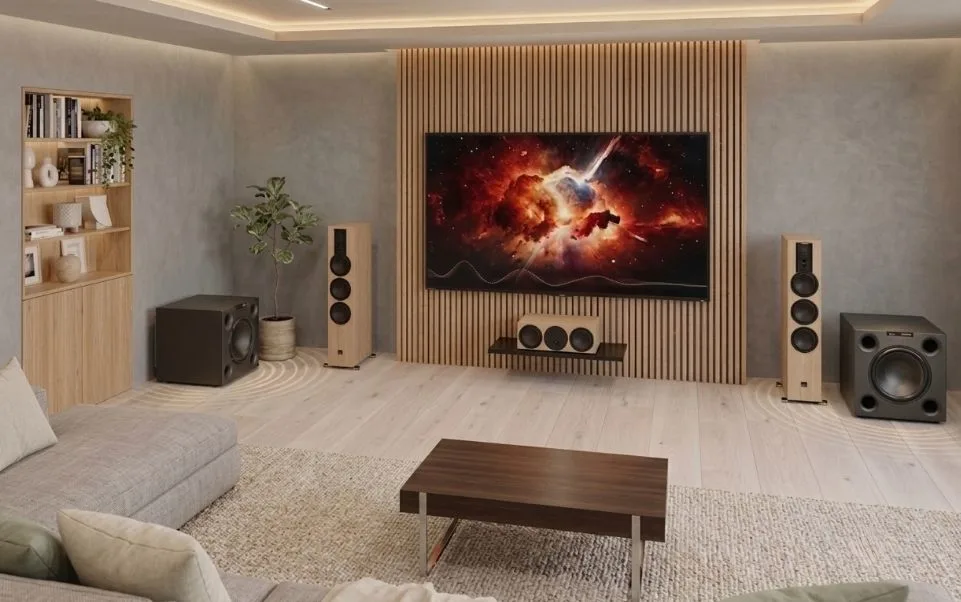
Many home cinema enthusiasts and audio professionals recommend using two subwoofers rather than one, mainly in larger rooms. The reasoning is straightforward: bass frequencies, especially below 60 Hz, behave unpredictably in enclosed spaces. They create peaks and nulls, that is spots where certain frequencies are too loud, and other spots where they barely register. A second subwoofer helps smooth out these inconsistencies and distributes bass more evenly across the listening area.
Purpose of a Subwoofer in Home Theater
The purpose of a subwoofer in home theater is to complete the sound, and it does not compete with your other speakers. It supports them. It takes on the frequencies that would otherwise be lost, and in doing so, it turns a good system into one that sounds whole. Films feel bigger. Music sounds fuller.
As you might already know, professional home cinema installation ensures every speaker and display is positioned for the best possible viewing along with listening experience. For more about subwoofers and home theater installation, get in touch with Climax Cinemas.
Frequently Asked Questions (FAQs)
Q1: Do I really need a subwoofer if I also have floor-standing speakers?
A1: Yes, in most cases, a subwoofer still adds value even with floor-standing speakers. Many floor-standing speakers claim to reach down to 40 Hz or lower, but their actual output at those frequencies is often reduced compared to their rated response.
Q2: Where should I place the subwoofer in my home theatre room?
A2: The most common starting point is along the front wall, roughly in line with or near one of your main speakers. Place the subwoofer at your main listening position, play some bass-heavy content, then slowly walk along the walls listening for where the bass sounds clearest and most balanced. Once you find that spot, that is where the subwoofer should go. Corner placement can increase volume but often leads to boomy, uneven bass. Room acoustics make this a somewhat individual process, so experimentation is worth it.