
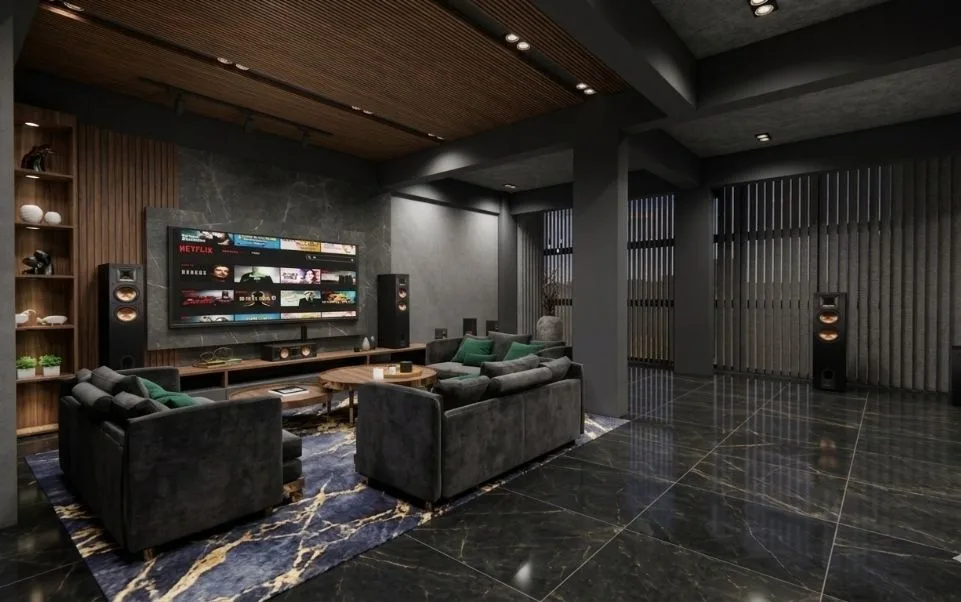
Can Build a Home Theater Without a Dedicated Room? Here’s How

Yes, you can build a home theater without a dedicated room by transforming your living room, basement, or even any open-plan space into an entertainment hub. At Climax Cinemas, we see many people moving away from the idea that you need a windowless, plain, dark room to enjoy films. With modern technology, it is possible to incorporate high-end visuals and audio into multipurpose areas without ruining the aesthetics of your space. By choosing the right gear and layout, your lounge can provide a true cinema experience at home when the lights go down, while remaining a comfortable family room during the day.
Best Seating Arrangement
The way you arrange your chairs or sofas dictates how comfortable the experience will be. In a shared space, you usually have to work around existing furniture, and the goal is to ensure every person has a clear view of the screen without straining their neck.
Finding the Viewing Angle
We suggest placing your primary seating directly opposite the screen, and if you have a large L-shaped sofa, try to position the screen so that the longest section of the sofa faces it. You should avoid placing seats at sharp angles, as this can distort the image and also cause very discomfort during long movies.
Distance Matters
The distance between the home theater seat and the screen is a main factor. So if you sit too close, you might see the pixels, and if you sit too far away, you lose the feeling of being inside the movie. One of the best ways for the best experience is to sit at a distance that is roughly 1.5 to 2.5 times the diagonal width of your screen, and this creates a sense of immersive entertainment without overwhelming your eyes.
Right Screen
Choosing the right display is one of the most important decisions you will make. When it comes to a multipurpose room, you mainly have two choices: a large flat-screen television or a projector setup.
Televisions for Bright Rooms
If your room has many windows and you cannot easily block out the sunlight, a high-brightness LED or OLED TV is usually the best choice. These screens perform well even with some ambient light, and they are also easier to use for daily news or casual watching.
Projectors for the Big Screen Feel
For those who want a massive image that disappears when not in use, a projector is ideal. We can install motorised screens that roll up into the ceiling at the touch of a button, and this keeps your media room design clean and tidy. You only see the screen when it is time for a movie.
Also Read:How to Choose the Best Projector for A Home Theater Room Setup
Screen Placement Tips
Proper screen placement ensures that the image is at eye level, and if the screen is too high, such as above a fireplace, it can lead to neck pain. We recommend positioning the screen so that your eyes are level with the bottom third of the display when seated.
Good Sound System
Sound is half of the experience. To get that theatre feel, you need a surround sound system. In a room that is not dedicated to movies, you might worry about wires and large speakers cluttering the floor.
Discrete Audio Options
We often recommend in-wall or in-ceiling speakers for shared spaces, and these provide excellent sound quality while remaining almost invisible. If you cannot cut into your walls, a high-quality soundbar with a wireless subwoofer can also do a great job.
.
Creating 3D Audio
To get the best results, you want sound to come from the front, sides, and even above you. This creates a bubble of sound. Even in a standard living room, we can position speakers to bounce sound off the walls or ceiling to mimic a professional cinema environment.
.
Right Ambiance
The mood of the room changes how you perceive the image on the screen. Even without a dark basement, you can control the environment to make it feel special.
- The screen can be blacked out using blackout curtains or blinds.
- If you want to prevent reflections on your home theater screen, it is best to opt for furniture with a matte or dark finish.
- To make the room feel warmer and absorb sound, place a rug on the floor.
Acoustic Solutions
A common issue in open-plan rooms is sound bouncing off hard surfaces like glass windows or tile floors, and this can make voices sound muddy and hard to understand. Adding some acoustic treatment in open-plan rooms can fix this effortlessly.
You do not need ugly foam pads on the walls. Bookshelves filled with books, heavy fabric curtains, and plush sofas all act as natural sound absorbers. We can also install stylish acoustic panels that can look like a decor element or art piece. These help keep the sound crisp and clear, ensuring you hear every whisper in a film.
Also Read:Why Your Room Echoes (And How Acoustic Treatment Solves It Easily)
Smart Lighting & Control
A smart home integration system makes managing your home theatre easy. Instead of using five different remotes, you can control everything from a single device or even your voice.
Also Read:Home Theatre Lighting Ideas: Create the Perfect Cinema Ambience at Home
Integrated Scenes
We can programme scenes for your room. For example, pressing a button could automatically lower the motorised blinds, dim the lights, as well as turn on the projector. This simplifies the process and makes the cinematic experience in the home theater feel more professional.
Subtle Lighting
Using LED strips behind the TV or under the sofa can provide a soft glow that helps reduce eye strain. This allows you to see nearby essential things without having bright overhead lights ruining the contrast on your screen.
Space-Saving Aesthetics
Keeping your room looking like a home rather than a tech shop is very important, and we use various methods to hide the equipment.
- Media cabinets: Store amplifiers and also players inside ventilated furniture
- Hidden cables: We run wires through walls or behind skirting boards to keep them out of sight
- Compact tech: Modern receivers and speakers are getting smaller in size without losing power, making them easier to hide
Professional Home Theater Installation
It is always best to consult us as early as possible, ideally during the home construction phase, if you plan to include a home theatre. This allows us to work directly with your architect or builder to optimise the room dimensions. Generally, we recommend a length-to-width ratio of 1.5 or 1.6. For example, if a room is 10 feet wide, it should ideally be 16 feet long.
Scaling the room size correctly is essential for the best results. Since sitting too close to the screen ruins the viewing experience, the smartest approach is to seek professional advice at the very start of your building project. From initial room planning and acoustic guidance to the final installation, our team provides the expertise needed to create the perfect setup for your home and budget. To know more about home theatre installation and for consultation, please get in touch with Climax Cinemas.
Frequently Asked Questions (FAQs)
Q1: Can I use a projector in a living room with windows?
A1: Yes, you can use a projector in a room with windows as long as you use blackout curtains to block the light or choose an Ambient Light Rejecting (ALR) screen that helps the image stay clear even when it is not perfectly dark.
Q2: Is a soundbar enough for a home theatre experience?
A2: A soundbar is a good starting point for a small space because it is easy to set up and takes up very little room, but for a truly immersive feeling, a full speaker system with a dedicated subwoofer is usually better.
Q3: How do I hide all the messy wires?
A3: We can hide wires by running them inside your walls during a renovation, using decorative trunking along the floor, or by choosing wireless speakers that only need a power connection.