
Home Theatre Lighting Ideas: Create the Perfect Cinema Ambience at Home

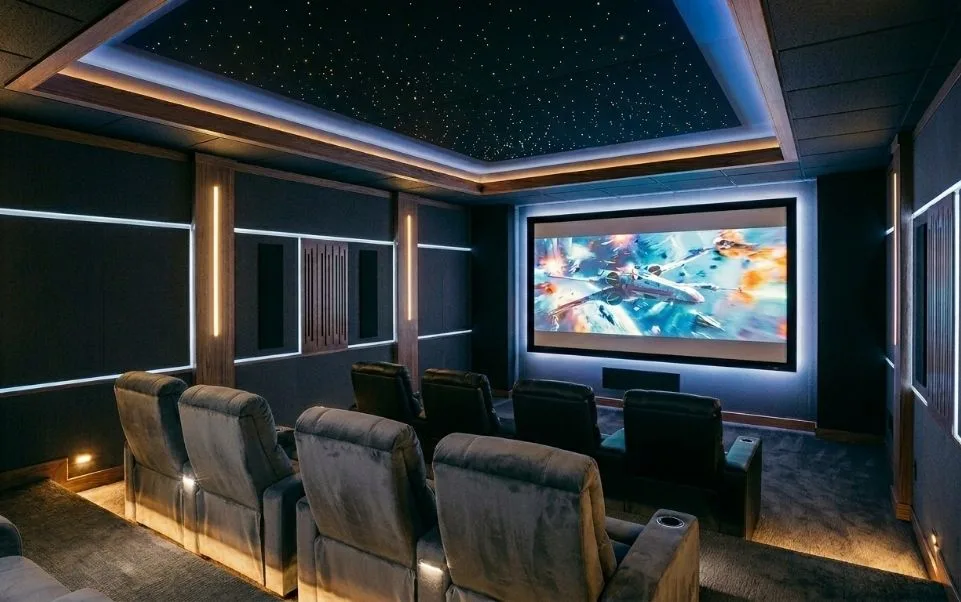
You can create the perfect cinema ambience at home by using a combination of dimmed recessed ceiling lights, LED strips, and accent lighting. Other effective options include wall sconces that cast light upwards and downwards, fibre optic star ceilings for a decorative feel, and low-level seat lights that help you move around without turning on the main lights.
Many people spend a lot of time choosing the right projector or the best speakers, but they forget that light is what defines the mood. When we design a space, we think about how the eyes react to different levels of brightness. If a room is too dark, the screen can feel uncomfortably bright. If there is too much stray light, the images on the screen look faded and lose their depth. Achieving a balanced home theatre lighting is about placing the right amount of light exactly where it is needed without it ever hitting the screen directly.
Home Theatre Lighting Ideas For Room
When we talk about home theatre lighting, we are looking at how different sources of light interact with your screen and your seating. You need layers of light that you can adjust depending on whether you are watching a high-action film, playing a game, or simply sitting down to talk. The different ways to get that cinema room lighting at your home are:
- Led Strips
- Star Ceiling Lights
- Seat-Side Lights
- Accent Lighting
- Task Lighting
- Cinema Wall Lights
- Cove Lighting
LED Strips
When it comes to home theatre lighting, LED strips are a good option that are very versatile and also easy to hide. At Climax Cinemas, we use LED strips to line the base of walls or the edges of the ceiling.And in this case, as it is hidden you only see a soft glow rather than the bulb itself. This is a great way to add home theatre ambient lighting that does not interfere with the projector.
Though we recommend sticking to warm tones or deeper blues to keep the focus on the screen, you can also use colour-changing strips to match the theme of the movie you are watching.
Star Ceiling Lights
Fibre optic star ceilings are a popular choice for those who want a decorative touch as well. Tiny strands of light are threaded through ceiling panels to mimic a clear night sky, and it provides a very low level of light that is enough to see your surroundings without washing out the screen. This type of cinema lighting for home adds luxury as well as makes the ceiling feel like it has disappeared into the outdoors.
Seat-Side Lights
Seat-side lights are small, low-powered lamps or LEDs built into the armrests or the floor next to your chair. They point downwards so they only illuminate your immediate area. This is another vibe, keeps the rest of the room dark while giving you the visibility you need for your snacks and controls.
Accent Lighting
Accent lighting is used to show off the room itself. If you have movie posters, acoustic panels with interesting textures, accent lights can highlight these features.
We usually suggest using small directional spotlights that are dimmed very low as it gives the room more character and prevents it from feeling like a plain black box when the movie is not playing.
Task Lighting
Task lighting is the type of light that is used for specific activities that require more visibility. These should be very focused so the light stays in that one area only. Using pendants that hang low over a counter is a smart way to keep the light contained so it does not spill onto the screen.
Cinema Wall Lights
Wall sconces are a traditional element in movie houses, and they look elegant and help define the room’s perimeter.
When choosing from these, look for dark sky style fixtures, meaning they are closed at the front and only let light escape from the top and bottom. This prevents a bright hot spot on the wall that could be distracting when you are trying to focus on a film.
Cove Lighting
Cove lighting involves placing light sources in a recessed ledge or cove high up on the walls. The light reflects off the ceiling and back down into the room and is a wonderful way to fill the space with a very soft, even glow. This is helpful when you are cleaning the room or setting up your equipment, but it can also be dimmed to a tiny percentage during the trailers.
Impact of Light on the Viewing Experience
If you are so focused on the cinema experience, you might already know that the way we perceive images is heavily influenced by our surroundings. When you have a professional setup, you are managing contrast. If there is a bright window reflection or a shiny light on the wall, your brain focuses on that instead of the movie. Proper planning ensures that the only thing grabbing your attention is the story on the screen.
Creating a cinematic environment is about how you control the environment around it. Home theatre lighting plays an important role in setting the mood and protecting your eyesight as well. By using layers of light, focusing on bias lighting, and ensuring safety with floor-level glows, you turn a simple room into a professional-grade theatre. Especially in a home setting, the right light is the bridge between a standard TV night and a truly immersive cinematic experience. For more information about home theatre lighting, get in touch with Climax Cinemas.
Frequently Asked Questions
Q1: What is the best colour for home cinema walls to work with lighting?
A1: Dark, matte colours are usually the best choice for home cinema. Deep greys, navy blues, or even dark burgundies absorb stray light rather than reflecting it onto the screen. A matte finish is particularly important because glossy paint will create distracting reflections from your wall sconces or the screen itself.
Q2: Can I use smart bulbs for my home cinema?
A2: No, smart bulbs are not usually recommended for a dedicated home cinema, as they can affect the viewing experience and also the consistency of lighting.
Q3: Does bias lighting really affect picture quality?
A3: While bias lighting does not literally change the pixels on your screen, it changes how your brain and eyes perceive them. By providing a reference point for “white” in the background, your eyes see the blacks on the screen as darker than they would look against a pitch-black wall. It also reduces strain on your eyes during long viewing sessions, making the experience much more comfortable.