
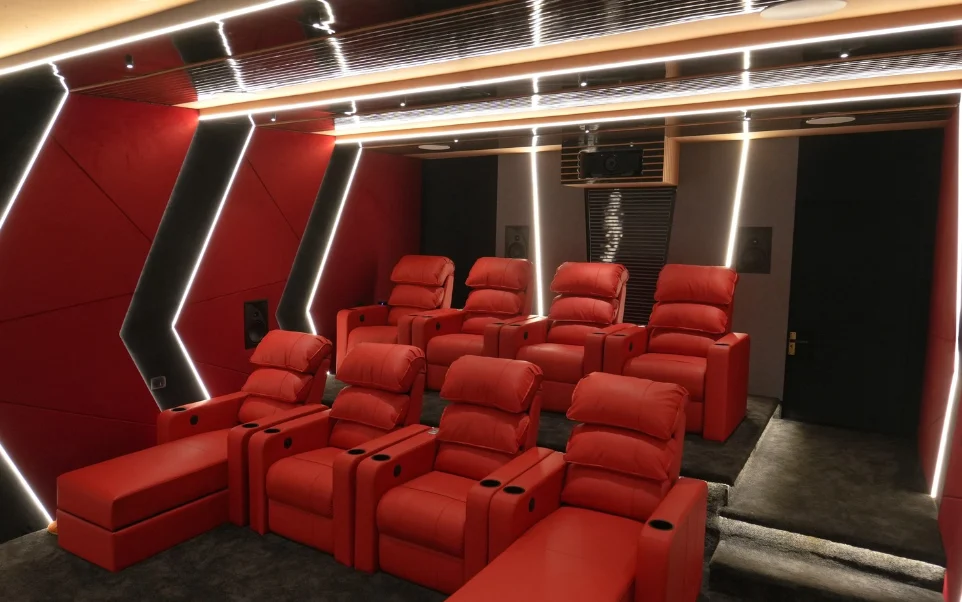
Acoustic Panels in Home Theater: Do They Really Improve Sound Quality?

Yes. Acoustic panels in home theater rooms improve sound quality by absorbing the reflections that soften dialogue and blur effects. Speech becomes clearer, music sounds more balanced, and surround effects feel better placed. The change is easiest to hear in rooms with bare walls, large windows or hard floors, and even more so when panels are paired with sensible speaker placement.
Key Takeaways
- Panels absorb reflections, so dialogue, music and effects sound clearer and more focused
- Treating the first reflection points and the rear wall gives the largest improvement for the least effort
- Soundproofing keeps sound in or out of a room, while acoustic treatment shapes how the room sounds inside
- Panels work best alongside good speaker placement and the receiver’s calibration
A living room or bedroom is built for everyday life, so the sound reaching your seat is a blend of the speakers and every wall, window and floor around them. In this blog, we explain how acoustic panels in home theater setups work, where they fit and what to expect once they are installed.
How Sound Behaves in a Home Theatre Room
Direct Sound and Reflected Sound
The direct path runs in a straight line from the speaker to your seat. Reflected sound takes a longer route, bouncing off walls, the ceiling, the floor and any large window before arriving a fraction of a second later.
Your ears blend the two. When reflections are strong, speech can sound softer at the edges, and the position of a passing car or a footstep becomes harder to judge.
Why Hard Surfaces Matter
Plaster, glass, tiles and wooden floors send most of the sound that strikes them straight back into the room. Sofas, rugs and curtains absorb a share, though a typical living space has too few of them in the right spots. That is why home theatre room acoustics varies so much from one house to the next, even with identical speakers and the same receiver.
Room shape plays a part too. Square rooms and rooms with parallel walls create strong and weak bass zones, which bass traps address later in this guide.
What Acoustic Panels Do
A panel is a frame filled with dense material, usually mineral wool or high-density foam, covered in breathable fabric. Sound enters the material and loses energy as it moves through the fibres, so less of it returns to the room.
Absorption Panels
Sound absorption panels for home theatre rooms are the most popular choice. They shorten the time reflections linger, which sharpens speech and fine detail in effects. Thickness matters here: a 50 mm panel handles mid and high tones well, while a 100 mm panel reaches further down the range.
Diffusion Panels
Diffusers scatter sound in many directions instead of absorbing it. They suit larger rooms and the rear wall, where a little liveliness keeps the space from feeling closed in. Smaller rooms usually benefit from absorption first.
Common Panel Styles
-Fabric-Wrapped Panels
These blend with the decor and come in a wide range of colours. They suit most acoustic wall panels for home theatre layouts, and a plain finish keeps attention on the screen.
Wood Slat Panels
Slats mounted over absorbent backing add warmth to the room and scatter some sound as well. They work well when the room doubles as a lounge.
Ceiling Clouds
Suspended panels above the seats are useful where overhead speakers are fitted for Dolby Atmos.
Soundproofing vs Acoustic Treatment
People use the two terms as though they mean the same thing, yet each solves a different task. Settling soundproofing vs acoustic treatment early helps with both the budget and the building work.
| Feature | Soundproofing | Acoustic Treatment |
|---|---|---|
| Main purpose | Keeps sound from travelling between rooms | Improves how sound behaves inside the room |
| Typical materials | Extra plasterboard layers, sealed doors, dense mass, isolation clips | Absorption panels, diffusers, bass traps |
| Best suited to | Late-night viewing, shared walls, busy streets | Clear dialogue, balanced sound, accurate placement of effects |
| Effect on home theatre sound quality | Indirect, through a quieter surrounding | Direct, heard from every seat |
| Installation | Building work, usually inside walls and doors | Wall and ceiling mounting, usually simple |
People use the two terms as though they mean the same thing, yet each solves a different task. Settling soundproofing vs acoustic treatment early helps with both the budget and the building work.
Also Read:Soundproofing vs Acoustic Treatment: What Your Home Theater Really Needs
Soundproofing vs Acoustic Treatment
Dialogue
With reflections reduced, dialogues can be heard clearly, and the volume can sit lower while every line stays easy to follow.
Surround Effects and Imaging
A vehicle panned from left to right feels more convincing when the room adds less of its own sound on top. Rain, crowds and background detail also settle into clearer positions around the seats.
Surround Effects and Imaging
A vehicle panned from left to right feels more convincing when the room adds less of its own sound on top. Rain, crowds A vehicle panned from left to right feels more convincing when the room adds less of its own sound on top. Rain, crowds and background detail also settle into clearer positions around the seats.and background detail also settle into clearer positions around the seats.
Music and Bass Balance
Panels mainly shape mid and high tones. Low bass needs separate attention, usually from bass traps in the corners. Together, these changes lift home theatre sound quality in a way that is easy to hear with familiar films.
Where to Place Panels
First Reflection Points
Sit in your main seat and ask a helper to slide a mirror along the side wall. Wherever you spot a speaker in the mirror, a panel belongs there. Repeat the same check on the ceiling above the seats.
Rear Wall and Corners
The rear wall sends sound back towards you from behind. Absorption here, or a mix of absorption and diffusion, settles the room. Corners gather low tones, so bass traps placed there make the biggest difference to bass.
Mounting Details
Height
Position the side panels at seated ear level, approximately 1.2 metres above the floor.
Space Around Doors and Screens
Plan around windows, doors and the screen so panels sit flush and look tidy. A paper sketch of the room saves repositioning later.
Acoustic Treatment
Acoustic treatment for home theatre rooms works best in stages. Each step builds on the one before it, and listening between steps shows what the room still needs.
- Measure the room and note hard surfaces, windows and doors
- Position speakers and seats following the manufacturer’s layout guide
- Treat the first reflection points on the side walls and ceiling
- Add bass traps in the corners
- Treat the rear wall
- Run the receiver’s calibration and listen again
Good home theatre acoustic design starts before any panel is bought. Speaker positions, seating and room shape guide the treatment. We follow this order when planning home cinema sound treatment, and we listen after each stage so that no extra panels are added beyond what the room needs.
Choosing the Right Panels
When comparing home theatre acoustic panels, a few details guide the decision:
- Thickness: 50 mm suits most side walls. 100 mm suits rear walls and corners
- Core material: Mineral wool and dense foam both absorb well. Check the density listed by the manufacturer
- Fabric: Breathable fabric lets sound reach the core
- Fire rating: Look for a stated safety rating, particularly in rooms with projectors and electronics
- Finish: Choose colours close to the walls so the screen stays the focus
Acoustic panels for home cinema rooms are available in standard sizes, and as made-to-order sets, so both small spare rooms and dedicated cinema rooms are covered.
Conclusion
Acoustic panels in home theater rooms do improve sound quality. They reduce stray reflections, which gives clearer dialogue, steadier effects and a better balance across the soundtrack. The strongest results come from a plan: choose between soundproofing and treatment, place panels at the reflection points and rear wall, add bass traps, then calibrate and listen.
If you are planning a new home theater room or improving an existing one, we can help with layout, panel selection and treatment planning. Visit Climax Cinemas to see our home theatre services and start a conversation about your space.
Frequently Asked Questions (FAQs)
Q1: Do acoustic panels make a real difference in a home theatre?
Yes. Home theatre acoustic panels reduce reflections that soften speech and effects. Most people notice clearer dialogue and better-placed surround sound within the first film.
Q2: How many panels does a home theatre need?
It depends on the room size and surfaces. Most rooms start with panels at the first reflection points and the rear wall, then add more after listening. A small room usually needs fewer panels than a large one.
Q3: Can acoustic panels soundproof a home theatre?
A3: Panels improve how sound behaves inside the room. Soundproofing helps prevent sound from entering or leaving a room, which uses extra wall layers, sealed doors and dense materials. Many rooms benefit from both.
Q4: Can curtains and rugs replace acoustic panels?
Curtains and rugs absorb some high tones and make a helpful addition. Acoustic wall panels for home theatre rooms are built to absorb across a wider range, so they give a more complete result.