
Soundproofing vs Acoustic Treatment: What Your Home Theater Really Needs

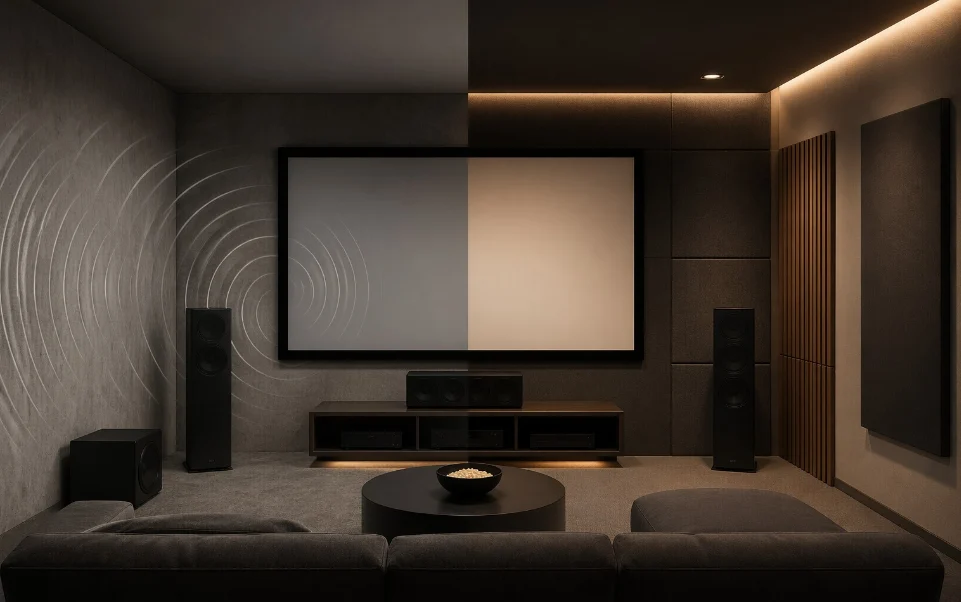
While acoustic treatment is what makes the internal audio sound clear and balanced, your home theatre requires soundproofing to isolate the room from the rest of the house. These two concepts are frequently confused, but remember that they serve entirely different roles in your viewing experience. One keeps the noise from bothering your neighbours, while the other ensures the dialogue is easy to understand. So, understanding soundproofing vs acoustic treatment is the first step toward building a home theater room that sounds as good as it looks.
Many people spend a lot of money on high-end speakers only to find the sound muddy or their family members complaining about the noise in the next room and this happens because the physical space has not been prepared for high volumes. Please note that without the right setup, even a top-tier Dolby Atmos sound system will struggle to deliver its best performance. By looking at how sound moves through walls and how it bounces off surfaces, home theater installation companies can create a plan that fits your specific needs.
Difference Between Soundproofing and Acoustic Treatment
Soundproofing is the process of preventing sound from entering or leaving a space, and it can involve adding mass to walls, sealing gaps, as well as using materials that disconnect the room from the rest of the building. If you can hear your washing machine during a quiet movie scene, you have a soundproofing issue.
At the same time, acoustic treatment focuses on the sound quality within the room, and it does not stop the noise from travelling through walls. Instead, it deals with echoes and also reflections. When a speaker plays a sound, the sound waves hit your walls, ceiling, and floor. If those surfaces are hard, the sound bounces back and creates a blurred effect and this is where soundproofing vs acoustic treatment becomes an important distinction. You might have a perfectly silent room that still sounds terrible because the audio is bouncing everywhere like a ball in a squash court.
How to Improve Sound Quality in Home Theatre
Improving the audio in your home theater is about controlling how sound waves travel from your speakers to your ears. You want to hear the sound directly from the speaker, not the delayed version that has bounced off the side wall.
Strategic Speaker Placement
It is important to remember that where you place your speakers in a home theater matters more than how much they cost. For a Dolby Atmos sound system, placement is even more specific because it involves overhead audio also. We suggest keeping speakers away from corners to prevent the bass from becoming boomy, and angling your front speakers toward your seating position can also help with clarity.
Managing Reflections with Absorption
Hard surfaces like glass windows or plastered walls are the not good for clear audio and by using acoustic treatment for home theater spaces, you can soak up those extra reflections. Soft materials like fabric-wrapped panels or thick curtains can stop the high frequencies from bouncing around too much. This makes voices sound more natural and less like they are coming from a cave.
Using Bass Traps
Low-frequency sounds, or bass, tend to gather in the room corners and this can make the sound feel heavy or slow.
Placing thick foam or fibreglass traps in the corners helps absorb this energy and this results in a punchier, cleaner bass that does not overwhelm the rest of the film soundtrack.
Room Calibration
Most modern receivers come with a microphone and also software to help calibrate your speakers. This process adjusts the timing as well as volume of each speaker to match your room. While it cannot fix a room with terrible echoes, it is a great final step once your panels are in place.
Does Soundproofing Improve Audio Quality in Home Theater
Soundproofing does not change the way your speakers sound, but it does improve your listening experience. It does this by lowering the noise floor and the noise floor is the background level sound in your room, such as the hum of an air conditioner or the sound of traffic outside.
When the room is quiet, you can hear the tiny details in a film, like a leaf rustling or a distant whisper. If you have invested in home theater soundproofing, you won’t have to turn the volume up as high to hear those subtle moments. This prevents ear fatigue and also allows the speakers to work within their comfortable range. So, while it doesn’t change the tone of the audio, it makes the environment in the home theater much better for watching movies.
How to Reduce Noise Leakage in Home Theater
If you want to prevent sound from escaping, look for air gaps and also thin materials. This is why a heavy door with a good seal is often more effective than thin soundproof vs acoustic panels placed on a wall.
- Install a solid-core door instead of a hollow one
- Use acoustic sealant around electrical outlets and skirting boards
- Add a second layer of plasterboard with a dampening glue between the layers
- Use heavy, sound-blocking curtains over windows
The goal here is to create a sealed environment and when you combine these methods with a properly calibrated Dolby Atmos sound system, the result is an immersive experience that stays contained within the room.
Conclusion
Creating a great home cinema is about more than just buying the biggest screen and it is important to balance the way the room handles sound. By understanding the roles of soundproofing vs acoustic treatment, you can decide where to spend your budget. Use soundproofing to create a quiet, private sanctuary, and use acoustic treatment to make the movies come alive with clarity.
At Climax Cinemas, we are dedicated to helping you achieve the perfect setup for your home. If you need help choosing the right equipment or designing your space, we have the expertise to guide you through every step. For more information, get in touch with Climax Cinemas.
Frequently Asked Questions (FAQs)
Q1: Can I use acoustic foam to stop my neighbours from hearing my music?
A1: No, acoustic foam is designed to stop echoes inside a room, not to block sound from leaving. To stop noise from reaching your neighbours, you need to add heavy materials like mass-loaded vinyl or extra layers of plasterboard.
Q2: Is it worth getting a Dolby Atmos setup if my room is small?
A2: A small room can actually benefit greatly from this technology because it creates a sense of height and space that makes the room feel much larger than it is. You just need to ensure you have some basic absorption panels to keep the sound from becoming too cluttered in a tight space.
Q3: What is the most common mistake people make with home cinema audio?
A3: The most frequent error is placing speakers inside cabinets or too close to walls without any treatment. This usually causes the sound to reflect immediately off the furniture, which ruins the clarity of the dialogue and also makes the bass sound muddy & distorted.