
Home Theater Design: The Complete Framework for Perfect Sound

Good home theater design treats the room, speakers, seating, electronics and calibration as one connected system rather than separate purchases. The goal is not louder sound, it is accurate sound that matches what the filmmaker and sound team intended. Get the room and placement right first, then layer in equipment and fine-tuning, and the whole system performs the way it is meant to.
Key Takeaways
- Room dimensions decide far more about sound quality than the price of your speakers
- Speaker and subwoofer placement affect imaging, bass response and how consistent the sound feels across seats
- Acoustic treatment is not decoration, it manages reflections and echo inside the room
- Calibration adjusts the system to your specific room, not the other way round
- Expensive equipment placed badly in a poor room will still sound worse than a modest system placed correctly
Common Questions About Home Theater Design
| Question | Answer |
|---|---|
| What is home theater design? | Designing the room and the AV system together as one integrated setup |
| What is a design template? | A reference framework for room, speaker, acoustic and calibration decisions |
| Why does speaker placement matter? | It shapes imaging, sound localisation and spatial accuracy |
| Why is calibration necessary? | It adjusts system performance to suit your specific listening environment |
| What does artist intent mean? | Reproducing the sound experience the filmmakers and sound team actually created |
| Is expensive equipment enough on its own? | No, room shape, placement and acoustics matter just as much |
Most people start planning a home theater by shortlisting speakers and projectors, and only think about the room afterwards. A well thought out home theater room design treats the room itself as the first decision, because it decides how every piece of equipment will actually sound once installed. This guide walks through the framework we use at Climax Cinemas when planning a project, covering room shape, placement, acoustic treatment and calibration in the order they should actually be tackled. If you have been searching for the best home theater room design ideas that go beyond a shopping list, this is the structure worth following.
Room Dimensions: Where Every Good Home Theater Setup Begins?
The size and shape of your room affects bass response, echo and how sound travels to each seat. A long narrow room behaves very differently to a square one, even with identical equipment installed. Before choosing anything else, measure your room properly and note ceiling height, window placement and any hard reflective surfaces such as glass or tile.
Seating Position
Seating should sit within the optimal listening zone for your speaker layout, usually somewhere between one third and two thirds of the room’s length from the front wall. Seats placed too close to a rear wall pick up unwanted reflections that muddy dialogue and effects.
Speaker Placement and Subwoofer Positioning
Speaker Placement
Front, centre and surround speakers each have a role in creating a believable soundstage. Poor placement causes vocals to sound like they are coming from the wrong direction, which breaks the sense of realism a good system is meant to deliver.
Subwoofer Placement
Bass behaves unpredictably in small rooms, creating hot spots and dead zones depending on where the subwoofer sits. Testing a few corner and wall positions before fixing the subwoofer in place usually gives noticeably smoother bass than picking a spot purely for convenience.
Acoustic Treatment and Display Placement
Acoustic Treatment
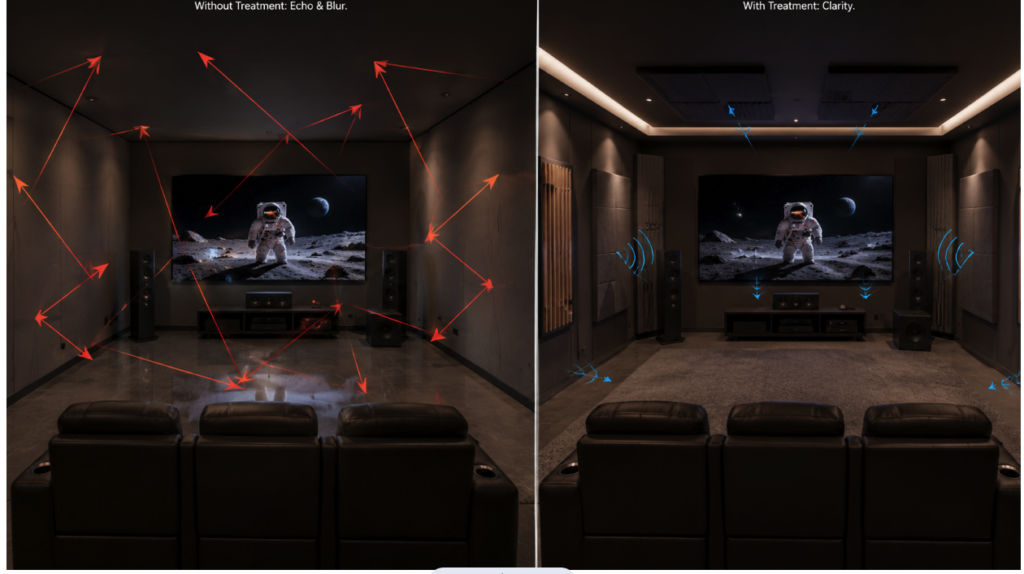
Hard walls and bare floors create echo and reflection that blur dialogue clarity. Absorptive panels, rugs and even curtains reduce this without needing a full studio-style build. This step is often skipped in budget setups, and it is usually the first thing that separates an average sounding room from a genuinely good one.
Display Placement
Screen height and viewing distance should match seating position and room lighting. Glare from windows or overhead lighting undermines even a good projector or display, so this is worth planning alongside the acoustic layout rather than as an afterthought.
Electronics and Calibration
Electronics
AV receivers, processors and cabling form the backbone connecting every component. Choosing electronics that match your speaker count and room size matters more than chasing the highest specification on paper.
Calibration
Once everything is installed, calibration tunes the system to your actual room using measurement microphones and software correction. This step accounts for wall reflections, furniture and room quirks that no two homes share exactly.
Lighting and Environmental Considerations
Ambient light, room temperature and even wall colour affect how a home theater feels to sit in for long periods. Dimmable lighting and darker wall tones generally support better contrast on screen, while proper ventilation keeps equipment running at a stable temperature over time.
- Match lighting control to your typical viewing hours, not just evening use.
- Keep equipment racks ventilated to avoid heat related performance drops.
- Choose wall finishes that reduce glare without making the room feel closed in.
What Affects Home Theater Setup Costs?
A well designed room does not have to mean an unlimited budget. Home theater setup costs vary by system type, room size and the amount of acoustic and structural work involved. For homeowners in Kerala specifically, home theater setup cost in Kerala often depends on whether the room needs structural acoustic work or simply equipment installation within an existing space.
Why Work With a Home Theatre Expert in Kochi?
Getting a design framework right on paper is one thing, applying it to a real room with real walls and real budget constraints is another. A home theatre expert in Kochi brings the experience of having solved these placement and acoustic problems across dozens of different room shapes, which usually saves both time and rework compared to a purely DIY approach. This applies whether you are planning a full home cinema installation in a dedicated room or a simpler setup in an existing living space.
Conclusion
Room dimensions come first, then placement, then acoustic treatment, then electronics, and calibration ties it all together at the end. Skipping steps or reversing this order is usually why some expensive setups still sound disappointing. Treating home theater design as one connected framework rather than a shopping list is what actually delivers consistent, accurate sound across every seat in the room, and it is exactly what separates genuine best home theater room design ideas from a random collection of equipment.
If you are planning a project and want this framework applied properly to your own space, get in touch with Climax Cinemas and we will help you understand room assessment, design and installation from start to finish.
Frequently Asked Questions (FAQs)
Q1: What is the most important factor in home theater design?
Room dimensions and speaker placement matter more than any single piece of equipment. A modest system placed correctly in a well treated room will usually outperform an expensive system placed badly.
Q2: Do I need acoustic treatment for a small home theater setup?
Yes, even small rooms benefit from basic absorption such as rugs, curtains or wall panels, since hard surfaces create reflections that affect dialogue clarity regardless of room size.
Q3: How much does home theater setup cost in Kerala typically involve?
Costs depend on whether you need structural acoustic work, the number of speakers, and display choice, so pricing varies from a straightforward equipment installation to a fully customised dedicated theater room.
Q4: Can I calibrate a home theater system myself?
Basic calibration is possible using receiver auto setup tools, though professional calibration with measurement microphones usually captures room specific issues that automatic settings miss.
Q5: What does home cinema installation actually include beyond equipment setup?
A proper installation covers room assessment, speaker and subwoofer placement, cabling, acoustic treatment recommendations and final calibration, not just placing devices and connecting cables.