
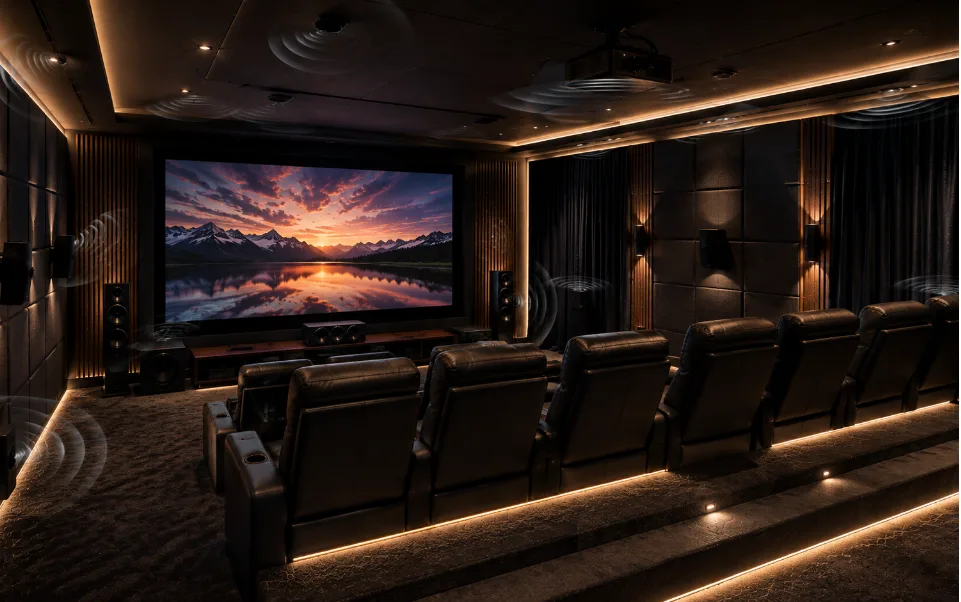
What Should You Consider in Home Theatre Interior Design?

Before setting up a theatre room, you should prioritise acoustics, layout, as well as lighting. Soundproofing measures help reduce sound transmission between rooms, while dark wall colours reduce screen glare. Proper seating dictates screen size and speaker placement. By planning these elements carefully, you can get comfortable viewing angles, clear audio, and a cinema-like atmosphere without compromising everyday comfort.
Key Takeaways:
- Choose dark, matte wall colours to minimise reflected light
- Use acoustic panels and thick carpets for better sound
- Position seating to match your screen size and viewing angles
- Install layered, dimmable lighting to set the right mood
- Hide cables and wires early in the planning stage
Introduction
You want a home theatre room that feels relaxing, looks brilliant, and sounds clear. Achieving this relies heavily on your initial approach to home theatre interior design. Whether you want a simple movie spot or a high-end viewing area, early choices dictate the final result. At Climax Cinemas, we prioritise comfort with smart planning for home theatre projects.
However, simply installing expensive speakers into an empty space will not work, and you need to think about sound bouncing off walls, seating arrangements, and how light affects the screen. Careful preparation prevents costly mistakes later on.
Planning Your Room Layout
Space and Room Dimensions
The shape and dimensions of your home theatre room affect both acoustics and seating layout. Square rooms can create stronger room-mode problems, while rectangular rooms are generally easier to design acoustically. When choosing home cinema interior design, we always look at the dimensions first. Your screen size should match the distance to your main seating area. A screen that is too large for the viewing distance can make viewing uncomfortable and may require excessive head or eye movement. Leave enough walkway space so people can move around easily in the dark.
Hiding Wires and Equipment
Nobody wants to trip over messy cables. Plan routes for power, HDMI, speaker and network cables before closing the walls, and use conduits where possible to simplify future upgrades. This keeps the space tidy and makes future equipment upgrades much easier.
Sound and Acoustic Treatments
Managing Audio Reflections
Great audio makes movies feel real, and hard surfaces like glass windows and bare walls bounce sound uncontrollably, making dialogue hard to understand. Soft furnishings and acoustic treatments help absorb reflected sound and reduce excessive reverberation inside the room. Adding plush carpets, heavy curtains, and upholstered furniture makes a massive difference to the listening experience.
Practical Acoustic Solutions
For a luxury home theatre design, dedicated acoustic panels are a necessity. These panels sit on walls and trap sound waves, preventing echoes. Soundproofing may involve measures such as additional wall mass, decoupling, acoustic insulation, and sealing gaps to reduce sound transmission between rooms. Adding thicker drywall or specialised insulation inside the walls keeps the noise contained. It stops loud movie explosions from waking up the house and blocks outside traffic noises.
Lighting Choices and Screen Glare
Controlling Natural Light
Windows create massive problems for projectors. Investing in heavy blackout blinds is a smart move if your room gets natural light. For the best projector contrast, minimise ambient light with blackout curtains or blinds, especially during daytime viewing.
When choosing artificial lighting, avoid bright overhead bulbs. We recommend using LED strip lights along the floor to guide people safely to their seats. Sconces on the side walls provide a soft glow without washing out the image. A key part of modern home theatre design involves smart lighting systems. These let you dim the lights slowly using a smartphone app just as the movie starts.
Selecting Wall Colours
Bright or glossy walls can reflect projector light back into the room, reducing perceived contrast and creating distractions. Dark, matte shades like deep blue or charcoal work wonderfully here. Glossy finishes cause distracting reflections, so stick to flat paint.
Choosing the Right Furniture
Comfort is your main priority since you will spend hours sitting here. Chairs must support your back properly. For multiple seating rows, tiered platforms can improve sightlines, provided the room has enough space and ceiling height. Building a small wooden platform for the back row ensures everyone gets a clear view.
When exploring various home theatre interior ideas, you will find a range of options. Some prefer large sectional sofas for a relaxed family vibe, while others want individual reclining chairs with cup holders. The choice comes down to how you use the room. A space for watching sports with friends requires different seating than a room for classic films.
Comparing Seating Materials
| Material Type |
Comfort Level |
Acoustic Properties |
Maintenance | Best For |
|---|---|---|---|---|
| Fabric Upholstery |
High | Generally helps reduce reflections |
Moderate | Family spaces |
| Faux Leather | High | Reflects some sound |
More reflective than fabric |
Budget-friendly rooms |
| Heavy Velvet | High | Can contribute to sound absorption |
Requires more care |
Dedicated dark rooms |
When reviewing home theatre room interiors, match the material to your lifestyle. Families might prefer easy-to-clean material, while sound purists choose velvet. Do not forget the details that make the space yours. Framed movie posters, themed artwork, or vintage cinema-inspired accessories can add personality to the room. Just ensure glass frames do not reflect screen light. Keep bright decorations behind the seating area.
Conclusion
Building a dedicated movie room requires careful planning and thoughtful choices. From choosing dark wall paint to selecting comfortable seats, every detail matters. Managing acoustics with soft materials ensures you hear every whispered line clearly. Planning your lighting keeps the image looking sharp and vivid. By addressing room layout, acoustics, lighting, seating, and cable management from the beginning, you can create a home theatre that delivers a comfortable and consistent viewing experience.
Are you ready to build the perfect entertainment space? At Climax Cinemas, we help you plan, design, and install everything you need for a stunning cinematic experience. Reach out to us today and let our team bring your movie room vision to life!
Frequently Asked Questions
Q1: What is the best room shape for a home cinema?
A1: A rectangular room is the best shape for a home cinema. The shape and dimensions of your home theatre room affect both acoustics and seating layout. Square rooms can create stronger room-mode problems because of their dimensions, making acoustic treatment and speaker placement more challenging.
Q2: Which wall colours work best for movie rooms?
A2: Dark matte colours like navy blue, deep grey, or black are the best choices. These shades absorb light and prevent glare from washing out your screen. You should avoid bright colours and glossy paint finishes.
Q3: How can I improve the sound in my cinema room easily?
A3: You can improve sound by adding soft furnishings. Thick rugs, heavy curtains, and plush fabric seating stop sound from echoing off hard surfaces.