
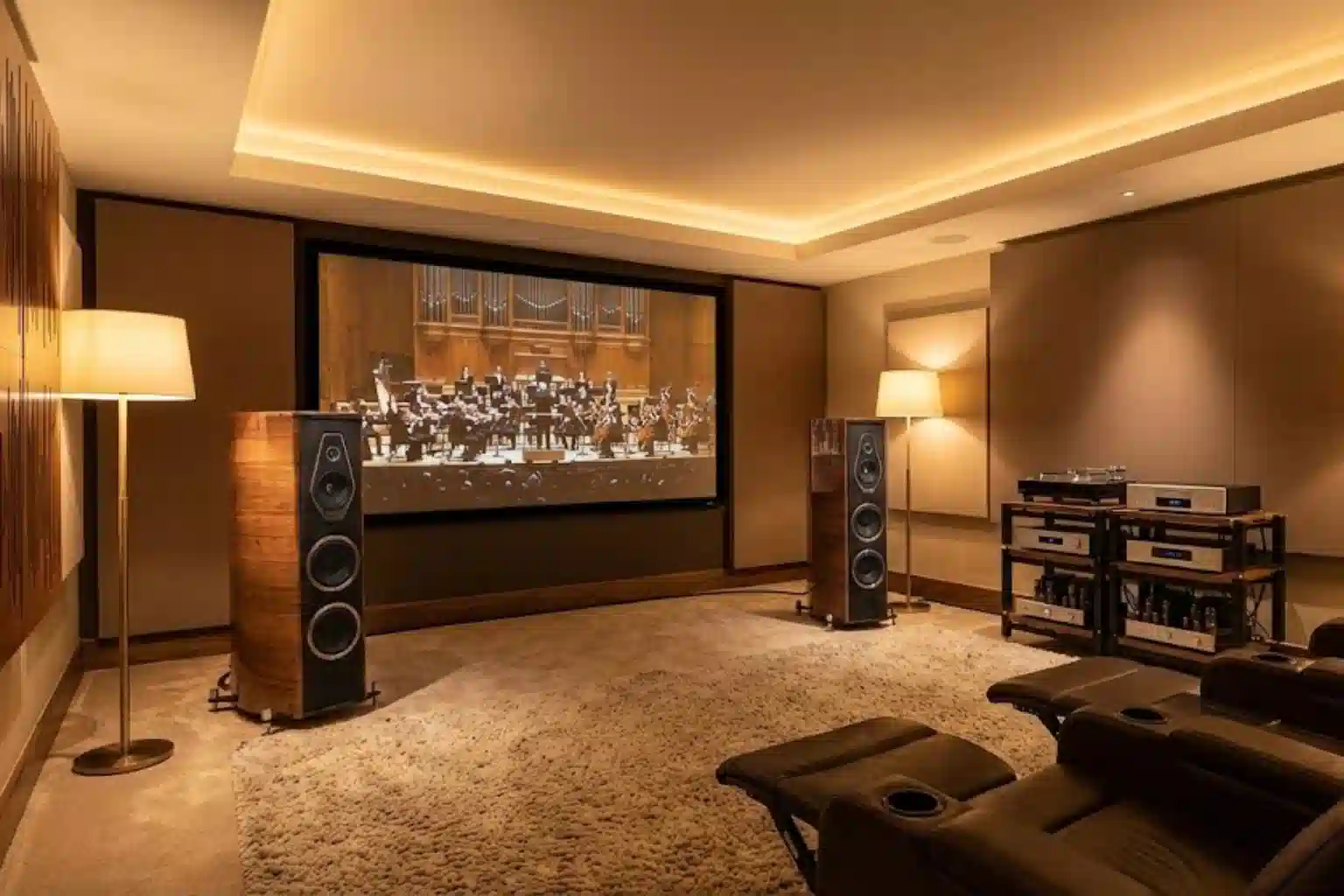
Cinema-Grade vs Audiophile-Grade Home Theaters: Understanding the Difference

You decided to invest in a high-quality home entertainment system because you want a better experience than your television’s built-in speakers can offer, right? But as you explore the options, you will come across different philosophies, brands, as well as technical terms. Two of the most common, yet easily confused, categories you will hear about are cinema-grade and audiophile-grade. While both promise a high-performance experience, they are designed to meet very different goals. Understanding this important difference is essential to choosing the best home theater for home.
Audiophile-Grade Home Theaters
For audiophiles, the goal is to reproduce recordings accurately, drawing attention to every detail and nuance. When using an audiophile system, it feels like the artist is present, which creates a genuine connection to the music. This dedication to sound quality allows listeners to engage with the art in a meaningful way. This creates a rewarding listening experience each time.
Sound
The hallmark of an audiophile-grade system is its neutrality and detail. The speakers are not designed to add any colour or character to the sound. The key characteristic of an audiophile-grade system is its neutrality and detail. The speakers are not designed to add colour or character to the sound. Instead, they aim to be a clear window into the original recording, and this is achieved by making the finer details of an instrument visible. It also makes visible the texture of a vocalist’s breath as well as the exact placement of each musician on the soundstage.
Components
This approach usually involves a simple, two-channel (stereo) setup with high-fidelity speakers and an integrated amplifier. The focus is on the quality of each component.
Ideal Use
Audiophile-grade systems are at their absolute best when listening to well-recorded music. It is a system for active, focused listening.
Cinema-Grade Home Theaters
At the same time, cinema-grade home theatre is built on a different philosophy. Its goal is to reproduce sound accurately and create a completely immersive and believable three-dimensional world that immerses the viewer.
Sound
The sound of a great cinema system is dynamic, impactful, and all-encompassing. From the quietest whisper of dialogue to the loudest sound, it is designed to handle the huge volume range of a movie soundtrack. The focus is on creating a continuous, 360-degree sound field.
Components
A cinema-grade system is a multi-channel setup. It starts with a 5.1 or 7.1 configuration. In its most modern form, it evolves into a Dolby Atmos sound system with additional height channels. This requires a powerful AV receiver, multiple speakers, and one or more bass speakers.
Ideal Use
This system is designed for watching movies and television shows. It is also excellent for real-time gaming.
Cinema-Grade vs Audiophile-Grade Home Theaters
| Aspect | Audiophile-Grade System | Cinema-Grade System |
|---|---|---|
| Main Goal | Pure Audio, Accuracy | Immersion, Impact |
| Sound Focus | Detail, transparency, neutrality | Dynamic range, envelopment, 3D space |
| Setup | 2.0 or 2.1 Channel (Stereo) | 5.1, 7.1, or Dolby Atmos (Multi-Channel) |
| Best For | Music Listening | Movies, TV Shows, and Gaming |
A single system can provide a complete musical experience and an immersive cinematic experience. But it requires careful design and component matching. It is possible to build a hybrid system that combines both philosophies. This might involve using high-fidelity, audiophile-quality speakers for the main front left and right channels. These speakers handle the bulk of musical information from a movie soundtrack. These are then paired with perfectly matched centre channel and surround speakers from the same family to create a balanced sound field.
However, this approach highlights the importance of professional design. Creating a hybrid system that performs well in both music and movies is a difficult balancing task. It requires a deep understanding of acoustics, speaker matching, as well as advanced audio calibration.
Climax Cinemas for the Perfect Experience
At Climax Cinemas, our process begins with a conversation. We take the time to understand what you love to watch and listen to. We then use this understanding to design a completely bespoke home entertainment system that is perfect for your space and preferences.
Whether you are looking to set up a Dolby Atmos home theater or a carefully balanced hybrid system that excels for music and film, our team can help. Contact Climax Cinemas to schedule a consultation!
Frequently Asked Questions (FAQs)
Q1: Is an audiophile system bad for watching movies?
A1: Not at all. A high-quality two-channel audiophile system will sound fantastic for movies, with clear dialogue and detailed sound effects. However, what it will lack is the immersive, multi-channel surround sound experience that places you in the middle of the action. You will hear the movie in front of you, but not around you.
Q2: What is the most important component in a home theatre system?
A2: The speakers and the room’s acoustics have the biggest impact on the final sound quality. Even if you have the most expensive amplifier in the world, if it’s connected to poor-quality speakers in a room with bad acoustics, the result will be disappointing. A professional installer will focus heavily on speaker choice, placement, as well as acoustic treatment.